
MSRP: $119.95
Over the years, harness innovation has taken us on a steady path toward lighter, more minimalistic designs. It seems that less is more has been the in-vogue mantra these days. The blending of climbing disciplines in the mountains has been a driving force for this, and as we see cutting-edge alpinists pushing the limits, the rest of us are often inspired to see what we can do with less gear, less warmth and less comfort. I too find myself racking up for long, difficult multipitch rock routes by clipping cams onto gear loops on a harness that we would have only used for glacier travel in years past.
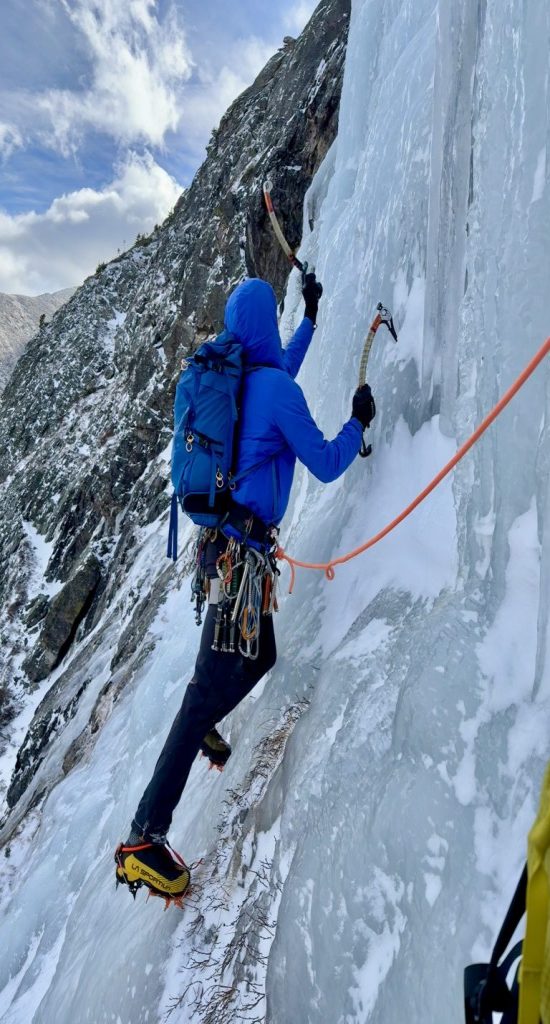
After receiving the Solution Guide to review last summer, I have used it exhaustively on rock and alpine multipitch routes in the Tetons, sandstone cracks in the Utah desert, and alpine ice and mixed climbing all around Colorado. This new Black Diamond harness feels like it’s brought core criteria back into the fold that we used to hold paramount over all else—comfort, durability and versatility, along with a few very modern developments to boot.
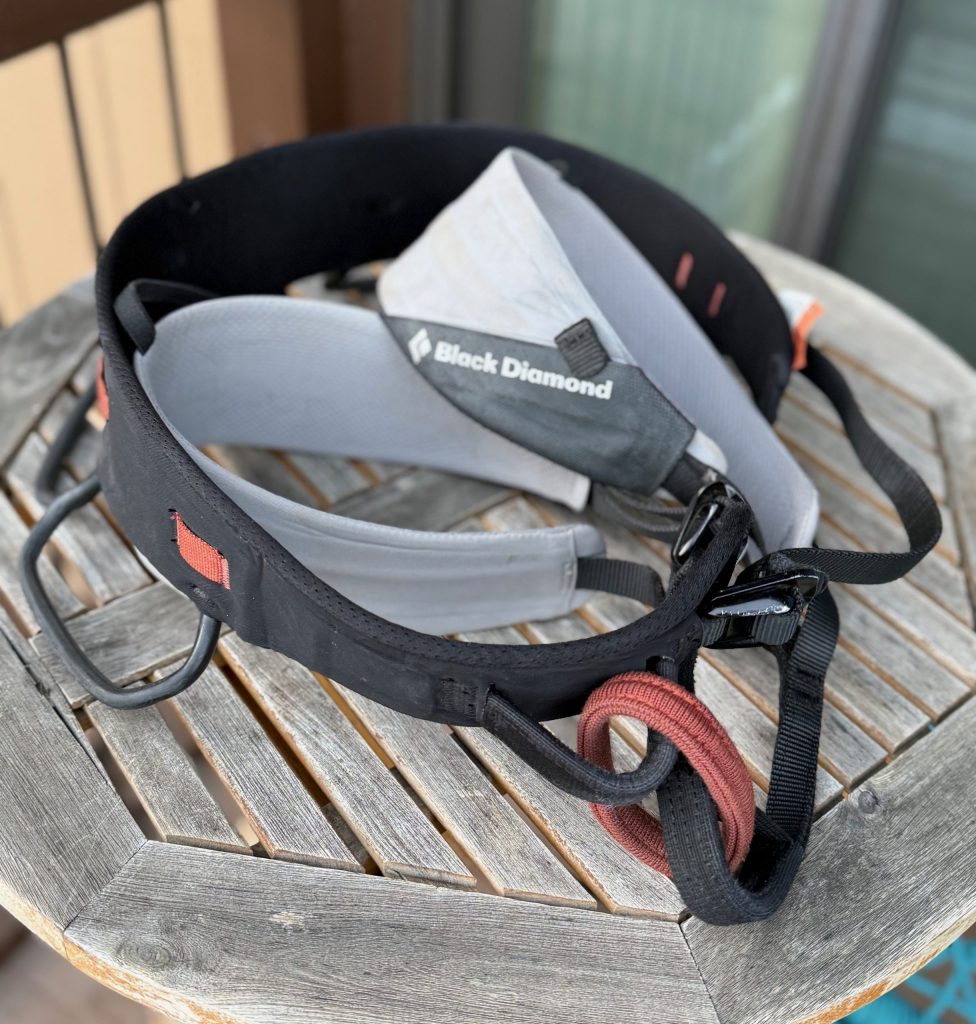
One of the first things noticeable about the Solution Guide is the size of the waist belt, denoted by a robust amount of padding. BD’s Contour Edge system that is incorporated into this harness uses the combination of rigidity in the center of the waist and leg loops while softening at the edges to try and achieve the best of both worlds. I found this to be mostly true while sitting at hanging belays on Teton granite as well as Indian Creek sandstone. It formed well to my hips, especially in warmer conditions when I only had a T-shirt (or nothing) on my torso. It’s comfortable and doesn’t have the same pressure points that similar class harnesses have given me.
The Solution Guide definitely leans into the comfort and rigidity side of that equation a bit more, and you find the trade-off most evident when packing it into your bag. I sometimes found it more difficult to justify that added comfort when trying to get the stiffer, bulkier harness into a 20-25L pack with shoes and an alpine rack already inside. If the route selection for the day consisted of hanging belays, then I didn’t mind the cramming as much. As a minor side note, the added comfort in the waist translated to better warmth at the belays on early season alpine ice in Rocky Mountain National Park, where even in November the wind can bring bitter cold up above 11,000 feet.
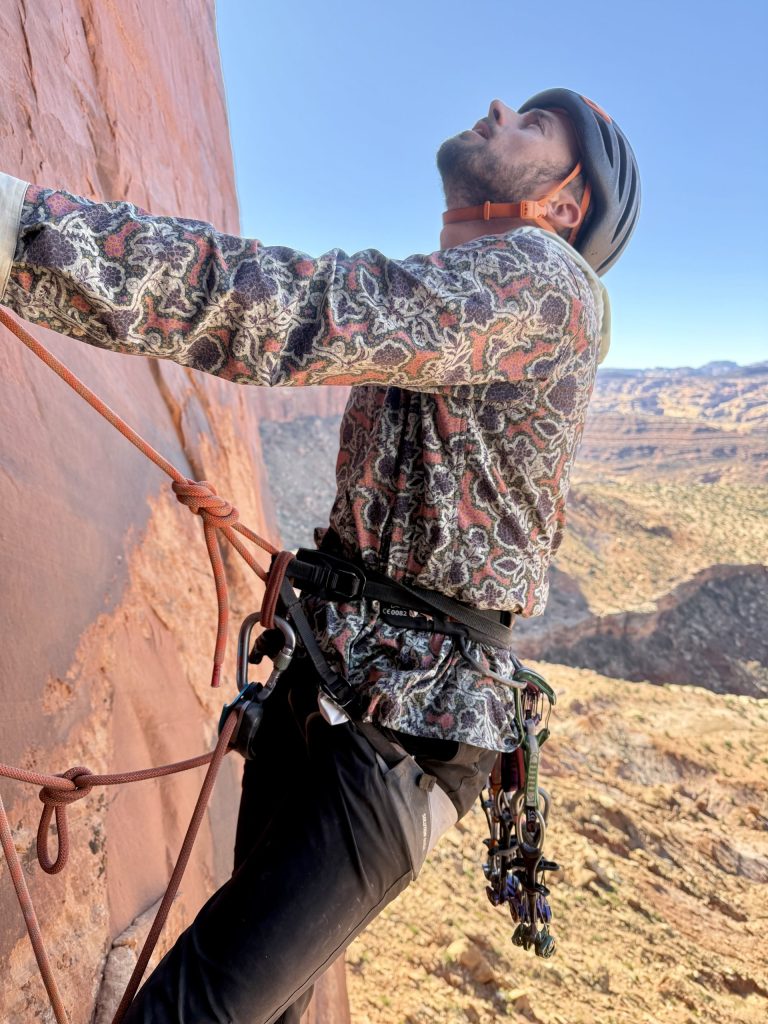
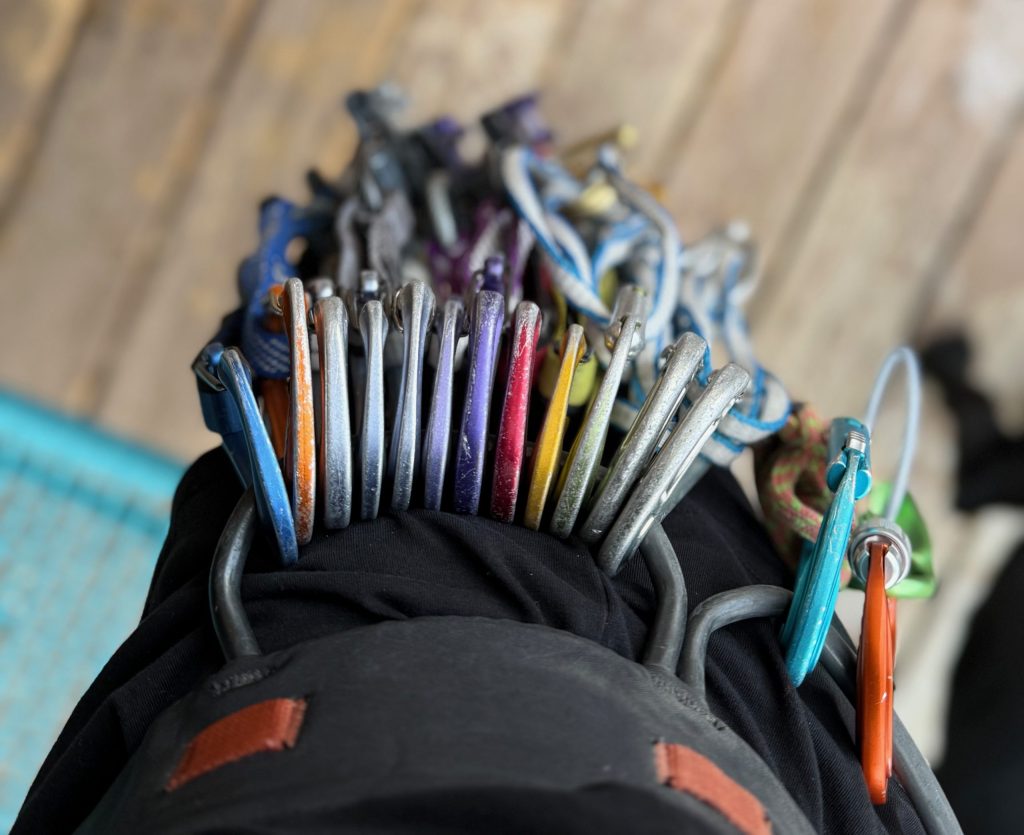
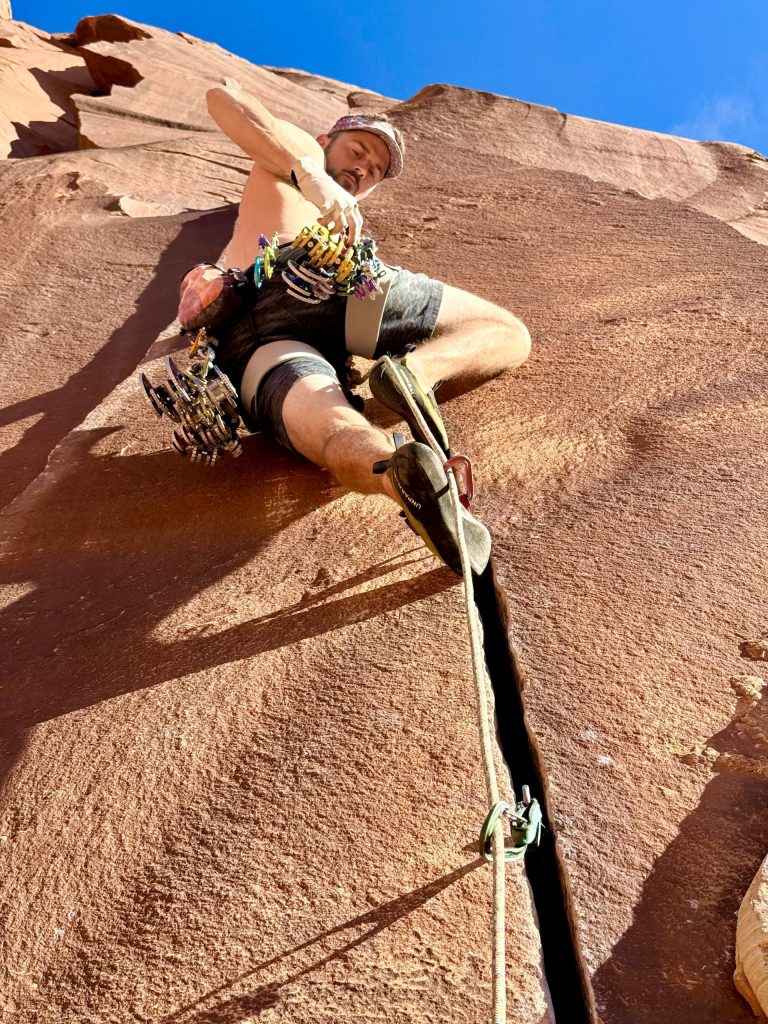
Where I find the brightest improvement with this harness is the size of the gear loops. BD did a great job molding a uniform size and shape for these, while still organizing them without the pesky overlapping that other harnesses have sacrificed in achieving the same amount of real estate. For single and multipitch crack climbing, this thing is worth the added weight and space in the pack. Having a triple rack of cams with some draws and accoutrement for the standard 130-150 foot desert pitches can be tedious and feel scary when you’re pumped off the deck trying to dig through carabiners that are smashed together and select the right piece. There were multiple times during my month-long stay in Utah where I found myself calmed by the neat arrangement of gear on my harness mid-pitch and was able to be more precise and quicker with placements. However, this certainly didn’t mean I was sending everything out there. I had plenty of opportunities to confirm that the added hip and leg padding translated to comfortable falls and fewer pinch points than I’ve generally had when the rope comes tight.
The seamless Dyneema Infinity Loop was also a standout feature. Aside from being visually pleasing, the lack of a bar tack on the belay loop adds a malleability that helps when organizing different leash/tie-in systems on your harness. This isn’t a totally new concept, and we’re seeing more harnesses adopt a continuously sewn belay loop. Black Diamond’s unique take on this is that the outer nylon sheath is quite a bit more supple than comparable versions on other harnesses, providing less friction when interacting with carabiners and other soft good materials. As a result, I found myself making far fewer micro adjustments with device positioning while belaying, and it generally feels more intuitive and easier to catch the loop with a carabiner. While I had suspicions that this softer feel would translate to faster wear, I don’t have any visible signs of fraying after over 100 pitches of rock and ice.
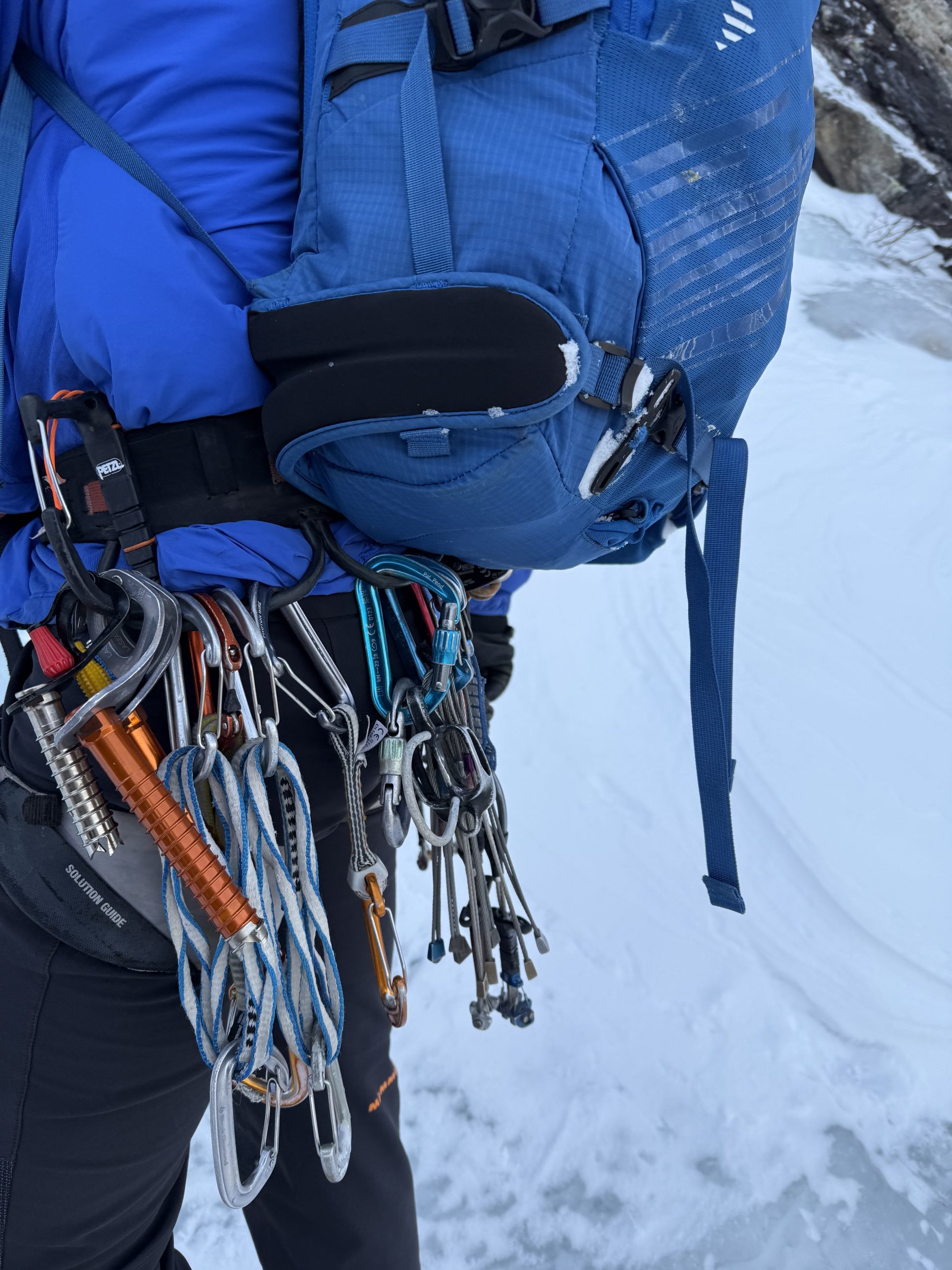
The Solution Guide is billed as an all-around harness, and as such it boasts four ice screw holder slots. I like using all my harnesses on ice so I can see for myself what designs I like for winter climbing, instead of being hemmed in by what manufacturers decide is best for that style of climbing. For that reason, I always appreciate the versatility of a harness that has pre-built slots. The placement for these on the Solution Guide is relatively ideal and keeps the screw holders from being too far forward or too far behind. In terms of size, the slots themselves are very snug, so for smaller screw holders it has the benefit of keeping them oriented flat without collapsing to the sides with more weight or movement.
The standard Black Diamond Ice Clipper fits well, as do most other smaller profiled ice screw holders. Larger profiled holders were difficult to fit through the material. If you don’t mind a smaller size screw holder then you may not be bothered by this, but I prefer the recent, larger styles which tend to have more volume in the stock, enabling you to carry more screws and have them sit well on your harness. I solved this by using universal holders that have small cinch cords that attach anywhere on a standard waist belt. Mostly this worked, but because the waistbelt tapers toward the front, the frontmost screw holder inched forward over time.
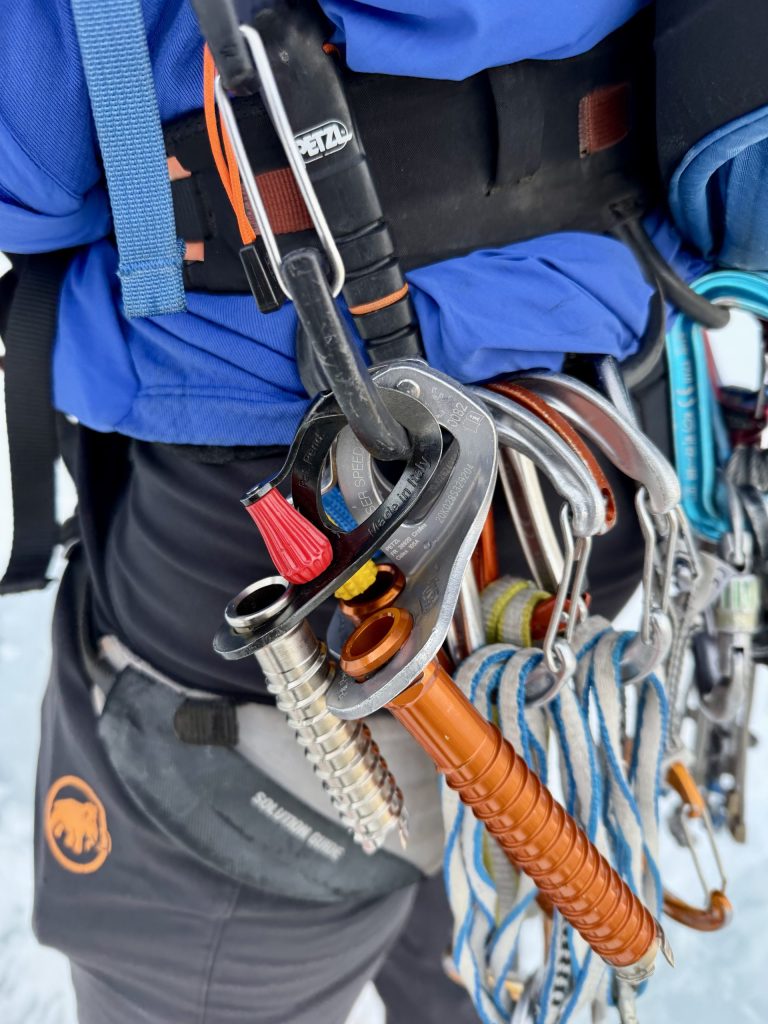
Beyond this minor shortcoming, on ice the new Solution Guide fared brilliantly, with the wide fifth gear loop in the rear being a welcome feature for storing excess gear, or a stashed belay puff while climbing. This rear loop has the added bonus of being a rated loop, so haul away! Personally, I appreciate how forward reaching the cord on this loop is, making it easier to grab things off the back with a gloved hand.
The only other small drawback I encountered was the elastic riser system that attaches the back of the waistbelt to the leg loops. Black Diamond uses the standard metal hook system which can make it difficult to make adjustments while wearing the harness. Even when removed, having to push the elastic through the buckle manually before pulling slack out the other side was a bit of a pain. Snap-buckle systems have become my favorite; the trade-off is durability, especially if you’re an offwidth aficionado.
In this modern era of climbing where we are trimming down and placing value on smaller and lighter, maybe there’s even more room for us to circle back to finding a place for a slightly bulkier, more comfortable style of harness. If you can find peace with occasionally having to play packing-Tetris while fitting the Solution Guide Harness into your pared-down Dyneema 20L pack, then you’ll surely reap the rewards while sitting at an uncomfortable belay later in the day, with plenty of breathing room for your gear holstered at your sides. Then again, maybe like me, it’ll just convince you to take the 40L pack for once.
Pros: durability; sizeable gear loops; comfortable waist; seamless belay loop
Cons: bulky; small ice clipper slots; tough-to-adjust elastic risers
Dylan is an IFMGA licensed Mountain Guide based in Boulder, Colorado, and has over a dozen years working professionally with outdoor equipment, ripping, tearing, breaking and crushing the best and worst of it all over the world. When he’s not climbing, skiing or running in the mountains, he’s usually wishing that he was. Keep up with Dylan at @dreedmtnguide.